The Durranis of Multan: a George Cross, a grove and the Abdali mango
On 13 June 2026, in the middle of the mango season, we travelled to Multan to meet Mr Durrani. He runs Masha Allah Bagh, a mango grove whose fruit is sold under the name Abdali Mango, and the grove is now Golden Multan’s official partner farm. His family’s story runs through the history of Multan, and through one of the bravest episodes of the Second World War.
A family woven into Multan
The Durranis are a Pashtun people, and the family belongs to their Saddozai line. In the second half of the eighteenth century, Multan was governed by Saddozai Nawabs on behalf of the Durrani kings of Kabul. The last of them, Nawab Muzaffar Khan Saddozai, ruled the city for 38 years, from 1780 until 1818, when Ranjit Singh’s Sikh army laid siege to it. He and seven of his sons were killed before Multan Fort fell on 2 June 1818. The city of Muzaffargarh, a short drive south-west of Multan, still carries his name.
The name of the grove’s mango carries that history too. Abdali was the older name of the Durrani confederation: in 1747 Ahmad Shah, a Saddozai, founded the Durrani Empire and renamed his Abdali tribe Durrani, after his own title, Durr-i-Durrān, “pearl of pearls”. Some accounts give Multan as his birthplace.
Captain Durrani in Malaya
Mr Durrani’s grandfather, Mahmood Khan Durrani, was born in Multan on 1 July 1914. After school he joined the army of the princely state of Bahawalpur, and in March 1941 he was sent to northern Malaya as a captain with the 1st Bahawalpur Infantry.
When Japan invaded in December 1941, his small party was cut off during the retreat. They stayed free, in hiding, for three months before they were betrayed. In captivity he refused to join the Indian National Army, the force the Japanese were raising from Indian prisoners of war, and instead worked against Japanese plans to send agents into India.
When the Japanese discovered what he was doing, they tortured him: starvation, deprivation of sleep and burning cigarettes pressed against his legs. He was given a mock trial and sentenced to death, then held for months in solitary confinement on little food and almost no medical care. He told them nothing.
He is recorded as the only George Cross recipient to have survived Japanese captivity.
The George Cross
His George Cross was announced in the London Gazette on 23 May 1946, and Field Marshal Lord Wavell presented it to him at the Red Fort in Delhi. The George Cross is the highest award for gallantry not in the face of the enemy. His medal is displayed at the Imperial War Museum in London, on loan from the family.
At Partition in 1947 he chose Pakistan, and he served in its army until he retired as a lieutenant colonel in 1971. He wrote about his war in an autobiography, The Sixth Column, published in Britain in 1955, and was known as a poet and writer. He was among the first George Cross members of the Victoria Cross and George Cross Association.
He died on 20 August 1995 in Multan, the city where he was born.
Masha Allah Bagh in its own words
The grove is older than Mahmood Khan Durrani himself. Its own film, which opens this article, says it has been growing mangoes since 1898, and that its founder, Hamid Khan Durrani, spent decades learning, experimenting with and growing mangoes. He set down what he learnt in a book, Sala-e-Aam, which the film describes as the synthesis of all his decades of knowledge on mango varieties and harvesting.
In the grove’s own words, from the film:
- Home to over 200 of the choicest varieties of mangoes, collected from all over the globe since 1898.
- Host to the parent plants of some of the major varieties of mangoes in Pakistan.
- These parent plants have provided saplings to all the major mango-growing regions of Pakistan over the last seven decades.
- The single largest repository of mangoes in the world.
Those are the grove’s claims rather than ours, and we will publish the evidence behind them as we document the grove’s trees. But even read cautiously, they describe something rare: a living collection of mango varieties, kept by one family in Multan for more than a century.
The grove today
Today Mahmood Khan Durrani’s grandson runs Masha Allah Bagh, and its mangoes are sold as Abdali Mango. For a brand named after Multan, it is hard to imagine a better partner in the city: a grove with deep roots there, run by a family that cares what its name stands for.
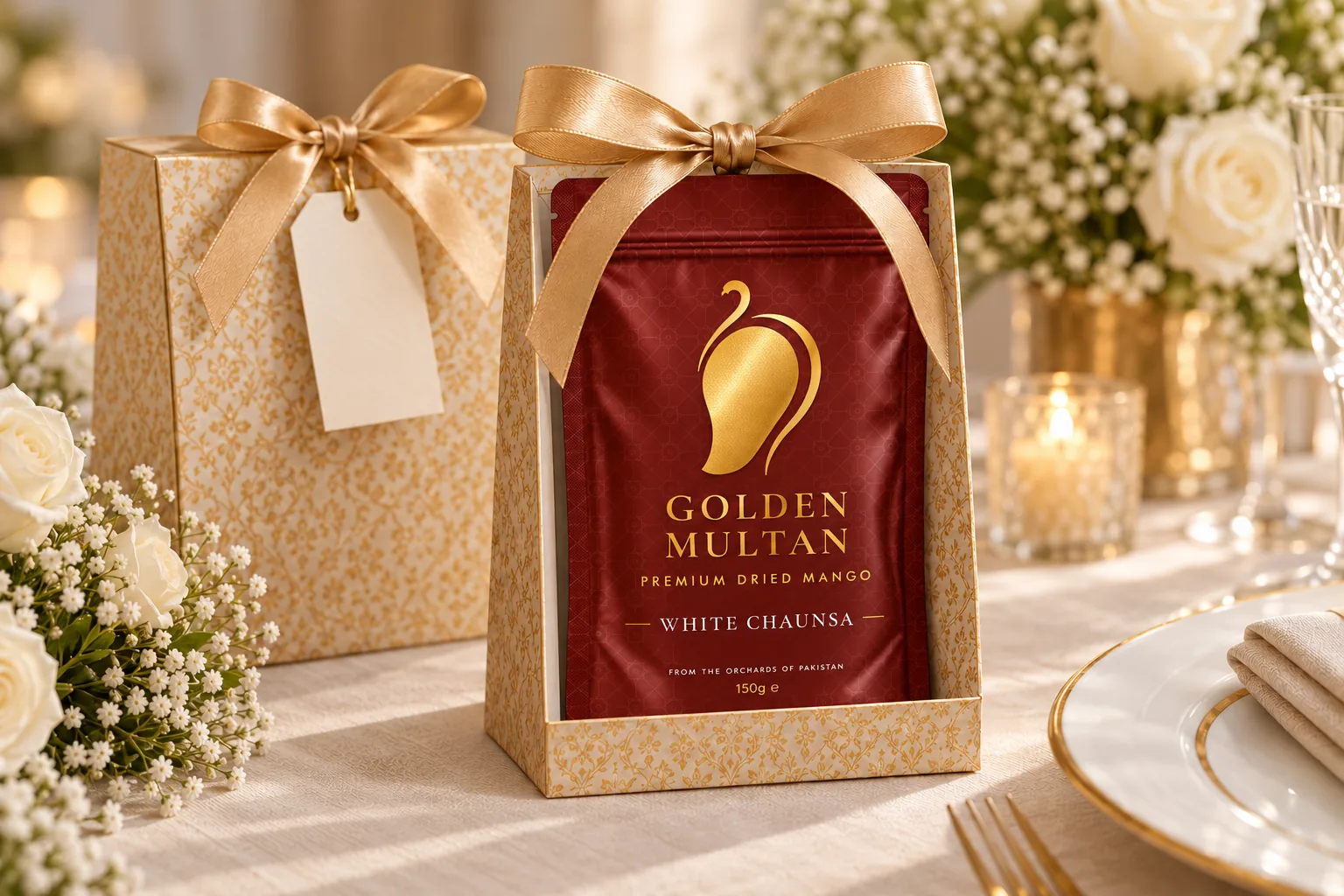
Golden Multan dries, packs and quality-checks its mangoes at our own site in Dharabi, Chakwal. In Multan, Masha Allah Bagh is where the story of our name and the story of our fruit meet, and it is a privilege to work with a family the city has every reason to remember.
We will be writing more about the grove, its trees and its Abdali mangoes. The first entry is already in our guide to Pakistani mango varieties.
Sources
- 1. Mahmood Khan Durrani — Wikipedia
- 2. Mahmood Khan Durrani GC (Direct Recipient) — Victoria Cross Online
- 3. Lieutenant-Colonel Mahmood Khan Durrani GC — Key Military
- 4. Durrani, Mahmood Khan — TracesOfWar
- 5. Muzaffar Khan Sadozai — Wikipedia
- 6. Ahmad Shah Durrani — Wikipedia
- 7. Masha Allah Bagh — film of the grove (2026), shown above
Guide to Pakistani mango varieties: names, seasons and types →