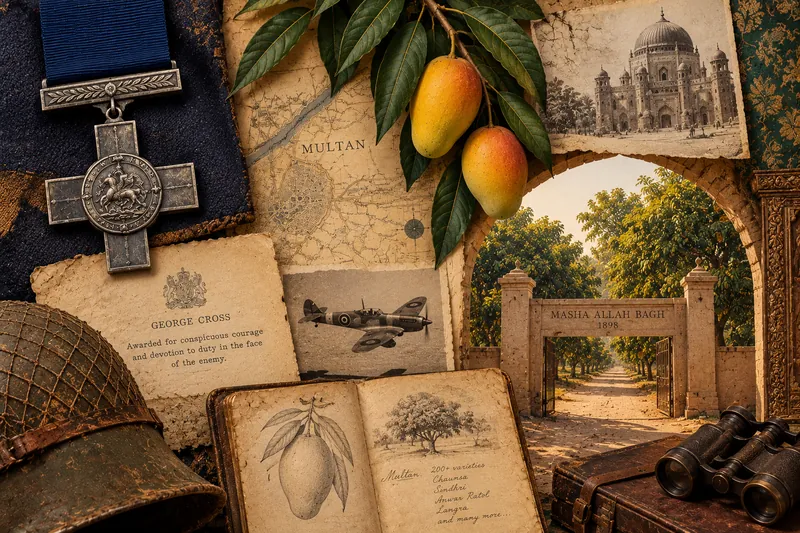
Why Multan grows the world’s most complex mangoes
Multan sits at roughly 30° North, in the south of Pakistan’s Punjab, close to where the Chenab river runs towards its meeting with the Indus. It is one of the oldest cities in South Asia, and for a very long time it has been one of the places where mangoes are taken most seriously.
Heat that would ruin most fruit
In May and June the city routinely passes 45°C. For most crops that is hostile. For the mango it is the final, necessary push: in the last weeks on the tree the fruit concentrates its sugars and builds the aromatic compounds that make a Multani mango smell the way it does.
River soil
The orchards stand on deep alluvial soil, laid down by the rivers of the Punjab over thousands of years. It drains well and lets trees root deeply, so they can reach water through the driest months without becoming waterlogged: a balance that matters enormously for fruit quality.
Growers who argue about it
Pakistan grows hundreds of mango varieties. Around Multan the conversation centres on a handful, above all White Chaunsa, Anwar Ratol and Sindhri, and families will argue with real passion over whose orchard, and which year, produced the best fruit.
Multan is called the City of Saints. It is also, quietly, one of the mango capitals of the world.
That is why we named Golden Multan after the city, and why our partner farm, Abdali Mango, is here. We work with them and with the best farmers across Pakistan, then dry and quality-check every mango at our own site in Dharabi, Chakwal.
Guide to Pakistani mango varieties: names, seasons and types →